
Keep It Clean Updates on Mille Lacs
The Keep It Clean Campaign (KIC) was introduced on Mille Lacs Lake during the 2022-2023 ice fishing season and has just wrapped up its fourth consecutive year. Mille Lacs — which was the third Minnesota lake to join the KIC effort — has been in the spotlight ever since. The KIC efforts on Mille Lacs have served as an example in the state for best practices on how to curb the amount of garbage and waste entering the lake and how to remove mismanaged trash from circulation.
Notably, KIC membership has grown from three lakes in 2022 (Lake of the Woods, Upper Red Lake and Mille Lacs Lake) to over 80 members/organizations representing thousands of lakes across the state and includes members in South Dakota and Wisconsin.
This year, after discussions with KIC leaders in Minnesota, the Iowa Great Lakes Fishing Club introduced KIC in Iowa. Officials from the Iowa Great Lakes are reporting positive results and hope to follow the roadmap of the KIC initiative in Minnesota to take the Iowa initiative statewide.
Keep It Clean: It’s the Law
The Keep It Clean bill (introduced in 2023) was signed into law in less than five months with bipartisan support. On July 1, 2023, it became illegal to place garbage and waste on or under the ice on Minnesota’s lakes and rivers. To report a violation, contact your local DNR conservation officer.
All Hands on Deck
Since its introduction, 100 percent of the resorts offering ice access and selling bait and tackle on Mille Lacs have participated in the Keep It Clean campaign. Additionally, bars and restaurants on or near the lake are also participating. The goal? To send a strong message to winter recreationists (ice anglers, winter campers, and snowmobilers) to leave with everything they brought, trash included!
Beginning with the first year of the KIC campaign, Mille Lacs business owners have reported a reduction in the amount of garbage they’re seeing on the ice.
This winter, Aitkin Soil & Water Conservation District (SWCD), was awarded a grant from the Minnesota Board of Soil & Water Resources (BWSR), which will help fund the KIC efforts on Mille Lacs Lake for the 2026-2027 and 2027-2028 ice fishing seasons.
Clean Up the Lake Findings
In September 2024, as an extension of the KIC efforts on Mille Lacs, Ann Brucciani Lyon, who implemented KIC at Mille Lacs Lake and continues to lead the effort, partnered with the Minnesota Pollution Control Agency in securing Clean Water Land and Legacy Amendment Funds. This money was used to gain insight into what happens to garbage once it enters the lake and how submerged litter moves around underwater.
An organization called “Clean Up the Lake” (CUTL) performed extensive underwater analysis of Mille Lacs, including 12 scuba surveys and three surveys using a remote-operated vehicle (ROV) in some of the most heavily fished areas of the lake. In addition to data gathering, the team removed 369 pounds of garbage from the lake. The scuba divers also performed AIS research.
CUTL also held two Litter Sorting events at Isle Public Schools with students, staff, parents, and community volunteers. These educational events involved sorting the aquatic and terrestrial garbage found at Mille Lacs Lake into 83 possible categories and then weighing and documenting it for CUTL’s analysis process.
Its conclusions about what happens to garbage that enters Mille Lacs include:
- Heavier items such as chain, metal, wheels, cinderblocks, anchors or glass remain submerged for long periods (sometimes decades), but previous volunteer lake clean-up efforts over time have helped reduce these litter loads.
- Lightweight litter, such as plastics, aluminum cans, fishing line, and shotgun shells are pushed to shore by wind and wave action because Mille Lacs is extremely shallow. By comparison, in the alpine lakes in the Sierra Nevada, litter becomes trapped on steep underwater shelves near shore.
- The late winter clean-up efforts by local ice fishing businesses before ice-out have likely helped to reduce litter loads significantly.
- Winter ice traps litter and then carries or pushes it to shore during ice out making shoreline cleanup efforts in the spring essential to reducing the amount of garbage that recirculates and degrades around the lake.
USGS — Microplastics Detected In Mille Lacs Lake
Another reason to stop trash from entering and remaining in the lake is to keep it from degrading into particles that make its removal impossible.
In May of 2023, James Ramano, Physical Scientist, U.S. Geological Survey, Upper Midwest Science Center, sampled Mille Lacs Lake for microplastics in surface water and benthic sediment. Microplastics were detected in each of the surface water samples at all 3 testing sites. Concentrations ranged from 0.000087 microplastics per liter to 0.0024 microplastics per liter, with an average of 0.00067 microplastics per liter. These concentrations are relatively low compared with the findings in other lakes that were sampled. The sediment samples are still undergoing analysis.
The best way to help keep the level of microplastics in Mille Lacs — or any other lake — from increasing is to prevent them from entering the lake in the first place. Removing existing plastic products currently in circulation is also important. You can help by picking up litter, and opting for non-plastic alternatives when available.
Mille Lacs Trash Tracker
In response to the findings of Clean Up the Lake, Brucciani Lyon and Aitkin SWCD created the Mille Lacs Trash Tracker. Launched on May 12, 2025, the Mille Lacs Trash Tracker is a community engagement program aimed at protecting Mille Lacs Lake and its surrounding wetlands by encouraging volunteers to remove mismanaged trash. This trash affects water quality, endangers wildlife and ecosystems, and pollutes the places we recreate and depend on for tourism.
To date, over 100 volunteers have collected more than a ton of trash, taking this garbage out of circulation in the lake! These individuals have spent more than 100 hours cleaning up 92 sites.
“We hit the one ton mark this fall,” says Brucciani Lyon, who has been instrumental in the creation of the KIC and Trash Tracker efforts. “A lot of this litter is lightweight plastic — think bags, bottles, caps, zip ties, and beach toys. It takes a lot of lightweight litter to add up to over 2,000 pounds.”
Any individual, group, business or other organization that conducts a cleanup in the water, along the shoreline or on the ice can enter data about their cleanup at MilleLacsTrashTracker.org. They can even upload a picture of what they found to the Photo Gallery for others to see. This data is then automatically updated on the Mille Lacs Trash Tracker home page, enabling users to view the results of the combined cleanup efforts around the lake in real time, including:
- Pounds of trash collected
- Number of minutes volunteered
- Number of participants
- Number of sites cleaned
- Cleanup locations
Both residents and visitors to the lake are encouraged to use the Mille Lacs Trash Tracker. Brucciani Lyon will be hosting a booth to promote Keep It Clean and the Mille Lacs Trash Tracker at the 2026 Healthy Land, Healthy Lake Expo on May 2, at Tulibee Tavern in Wahkon.
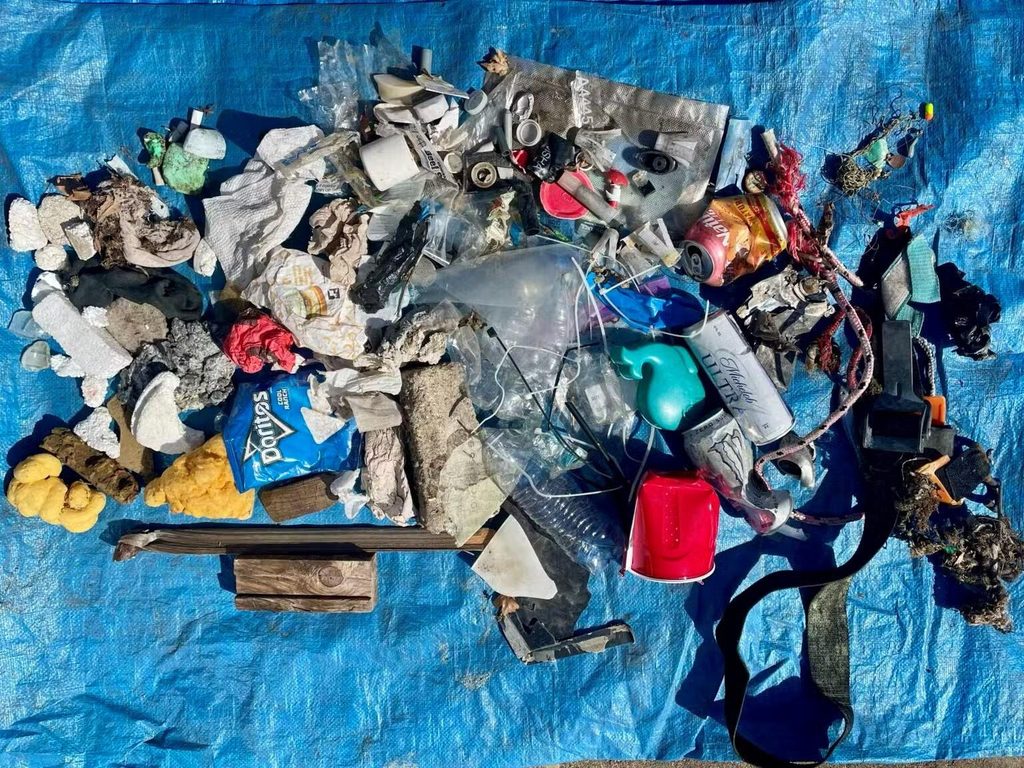
A sample of the garbage removed from Mille Lacs Lake during a shoreline cleanup event.
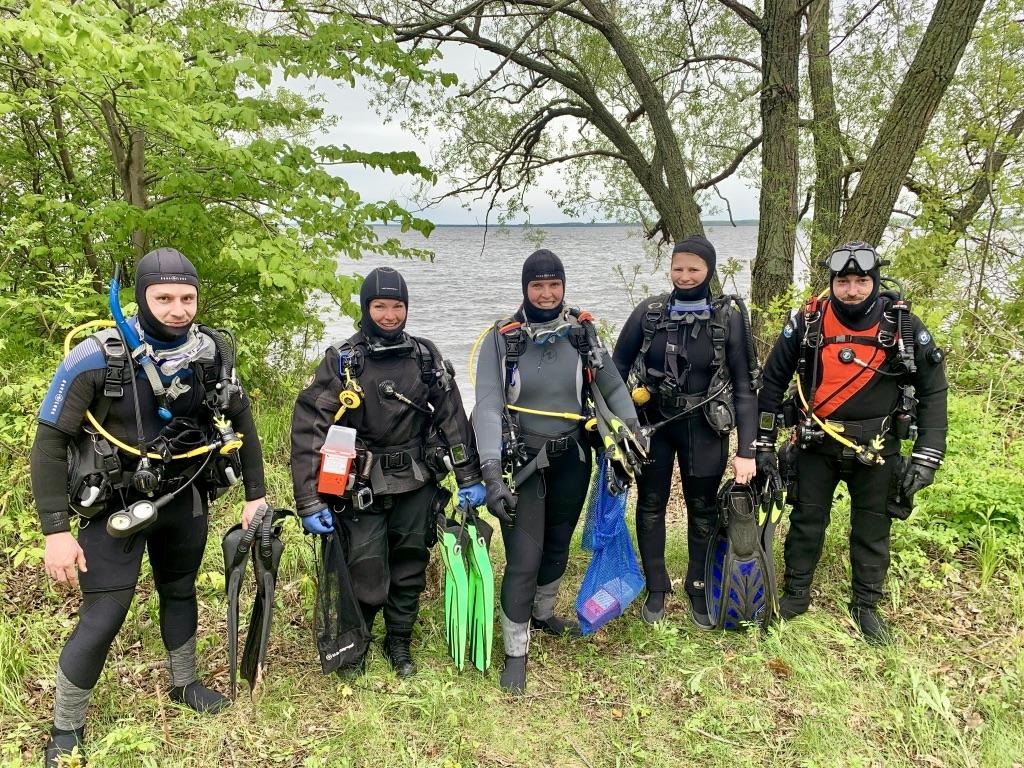
Ellie Joing, District Technician, Aitkin SWCD participates in a spring scuba diving event to removed litter from the lake.
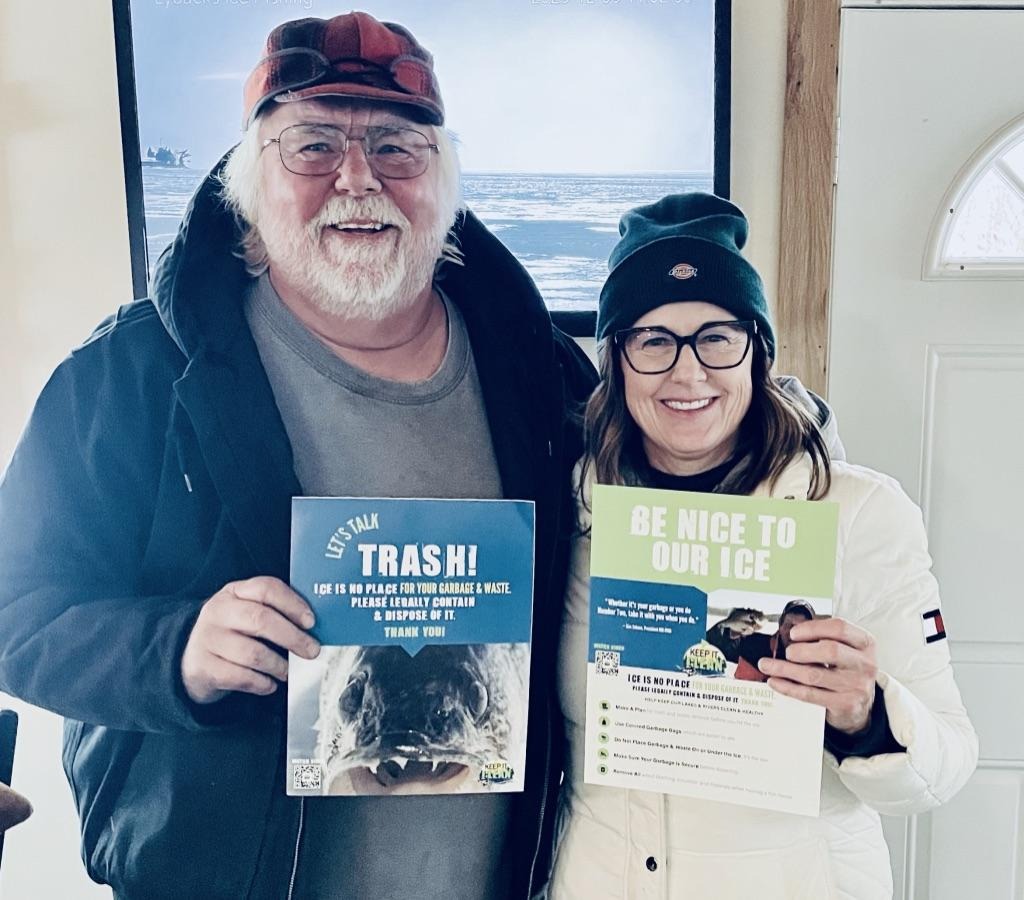
Ann Brucciani Lyon, Keep It Clean Mille Lacs, delivers KIC materials to Eddy Lyback, Owner, Lyback’s Ice Fishing, for the 2026-2027 ice fishing season.

Keep It Clean banner at Castaways reminds anglers to leave no trace.